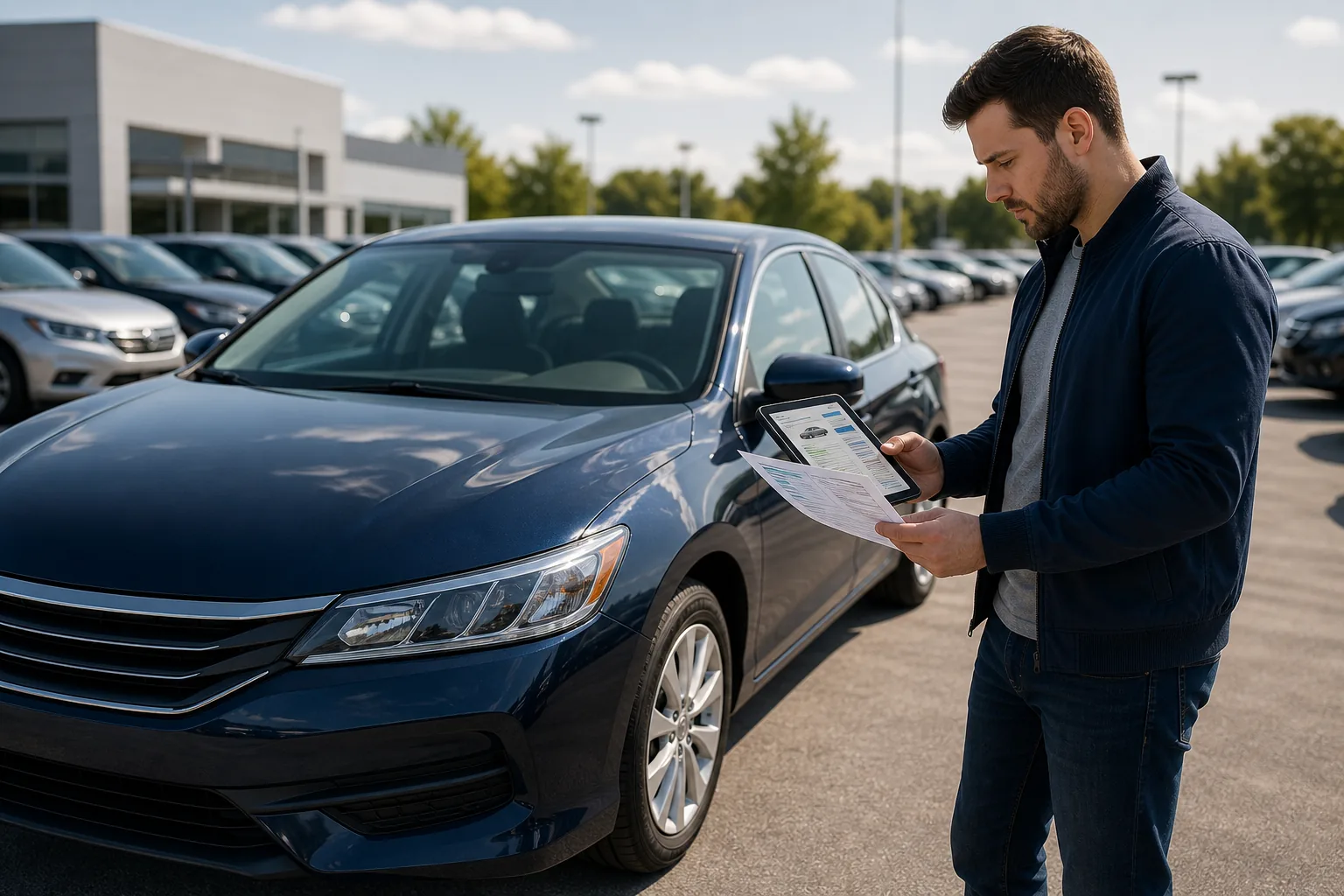
A vehicle can drive well, look clean, and still have a title problem. Hidden liens, inconsistent ownership documents, title washing, unreported branding, and seller-identity mismatches can delay registration or expose a buyer to financial loss. A careful title check should therefore happen before payment—not after the keys are handed over.
Title rules differ among states and countries, but the basic objective is universal: verify that the seller has the legal ability to transfer the vehicle and understand any history that affects its status. A vehicle title history report can organize available events, while official DMV records and the physical title provide the legal documentation needed to complete the transfer.
Why vehicle title status matters
The certificate of title generally identifies the vehicle, current titled owner, and any recorded lienholder. It may also display a brand or notation related to the vehicle’s past. If the seller’s identity does not match the titled owner, or if a lien remains active, the transaction may not be ready to complete.
Title history also affects financing, insurance, resale value, and future marketability. Some lenders and insurers restrict vehicles with certain brands. A buyer who unknowingly pays clean-title pricing for a branded vehicle may face a significant loss when reselling it. That is why title verification belongs beside the VIN report and used-car inspection, not at the end of the process.
Common title brands and what they suggest
Salvage title
A salvage title often means an insurer declared the vehicle a total loss or that it met a jurisdiction’s definition of salvage. Total loss is an economic decision: expected repair costs, vehicle value, parts, labor, and local rules all play a role. A salvage designation does not describe the exact damage or repair quality, so buyers need supporting records.
Rebuilt or reconstructed title
A rebuilt title generally indicates that a previously salvage vehicle was repaired and completed a required inspection or documentation process. That process is not the same as a comprehensive mechanical guarantee. The original loss, parts used, structural repairs, corrosion protection, airbags, calibration, and workmanship still matter.
Flood or water damage brand
Flood exposure can affect wiring, connectors, electronic modules, safety systems, upholstery, and metal components long after the interior has dried. Look for inconsistent carpet, corrosion beneath seats, silt in hidden cavities, musty odors, and unexplained electrical behavior. A flood brand is a major signal, but the absence of one does not prove a vehicle avoided water.
Junk, nonrepairable, or parts-only status
These labels can indicate that a vehicle is not legally eligible for ordinary road registration, depending on local law. A buyer should never assume that extensive repairs will make a nonrepairable vehicle registrable. Verify directly with the relevant authority before purchasing such a vehicle or major component.
Use the title report to identify the issue, then confirm the legal meaning and transfer requirements with the motor vehicle authority that will register the car.
Warning signs of a hidden title issue
The seller is not the titled owner
A seller may legitimately act for a family member, business, estate, or dealer, but the authority to transfer ownership must be documented. Be cautious when a private seller says the title belongs to a friend, asks you to leave buyer information blank, or avoids explaining recent ownership. “Title jumping” can leave taxes, signatures, and ownership transfers unresolved.
The title looks altered or incomplete
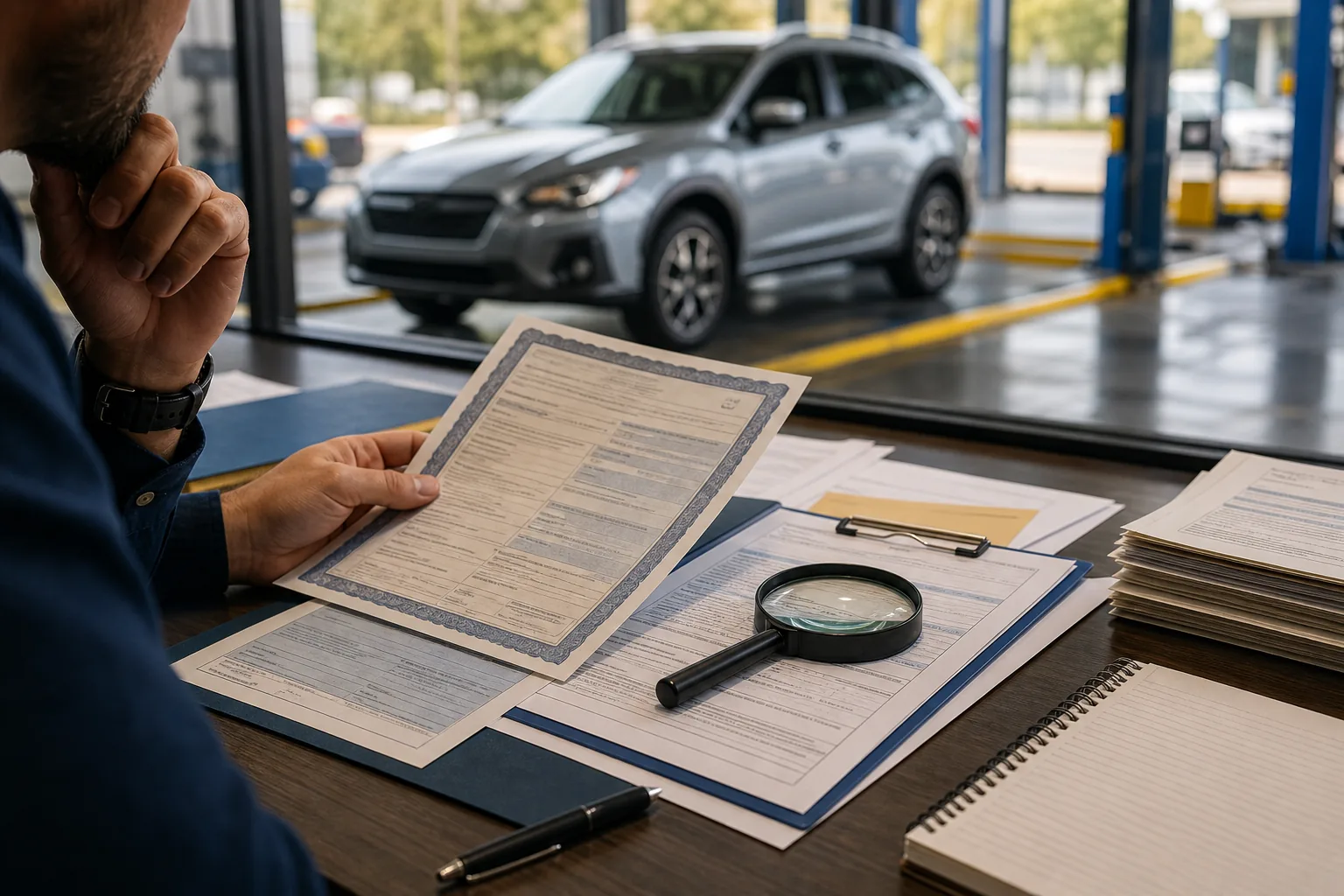
Inspect the document for erasures, overwritten mileage, missing signatures, inconsistent ink, damaged security features, or blank assignment sections that should be complete. Do not accept a photocopy as the final transfer document unless local procedure explicitly allows it.
The VIN does not match everywhere
Compare the title VIN with the dashboard plate, driver-door label, registration, insurance records, seller advertisement, and available report. One transposed character may be clerical, but a plate that appears replaced, scratched, loosely attached, or inconsistent with manufacturer labels deserves immediate investigation.
The vehicle moved through several jurisdictions
Interstate movement is common and not inherently suspicious. However, rapid transfers across jurisdictions—especially following major damage—can complicate the record trail. “Title washing” describes attempts to obtain documentation that does not clearly display a previous brand. A chronological history helps you see whether status changes make sense.
The price and documentation do not align
A price far below the market can reflect urgency, condition, or a legitimate bargain, but it can also compensate for a title, lien, theft, or damage problem. Ask why the price is low and require documents that support the explanation. Pressure to pay quickly is not evidence.
How to verify a vehicle title before purchase
- Match the VIN. Check every vehicle label and document.
- Match the seller. Compare government identification with the titled owner or documented agent.
- Review title brands. Read every printed notation and compare it with the history report.
- Check liens. Require a valid lien release when a lienholder appears.
- Review DMV records. Use official state resources or contact the agency when anything is unclear.
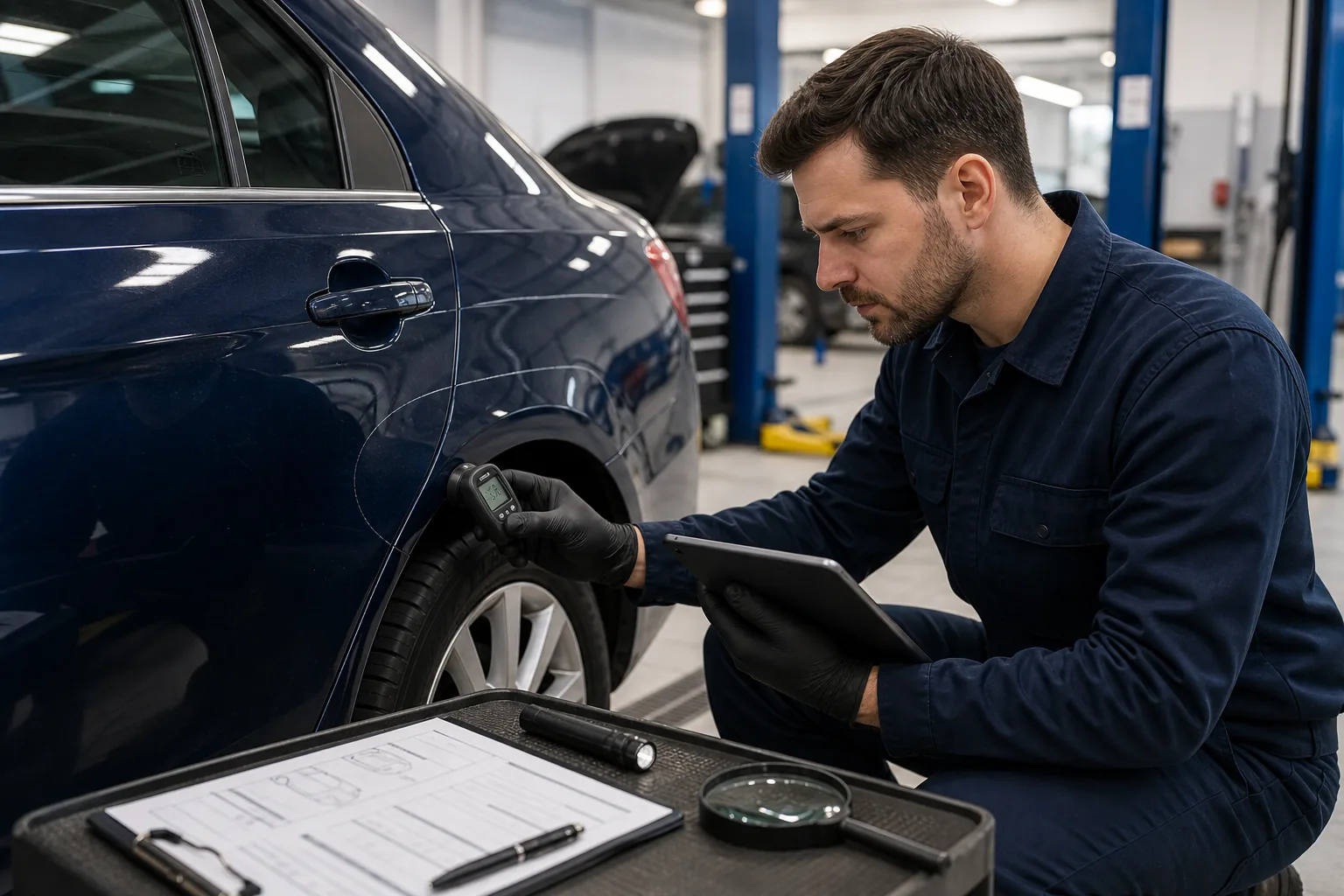
- Inspect the vehicle. Ask an independent professional to look for evidence consistent with past damage.
- Complete the transfer correctly. Follow local signature, odometer, tax, and registration requirements.
A Sales Title Meter report can help organize title and ownership context before you contact the agency. Compare the available report packages, then use official channels for final legal confirmation. The guide to what a vehicle title report can reveal offers a deeper look at the individual record categories.
Should you buy a salvage or rebuilt-title vehicle?
A branded-title vehicle is not automatically a bad purchase, but it requires a different standard of evidence. Ask for pre-repair photographs, insurer estimates, parts invoices, frame measurements, alignment records, calibration documentation, airbag records, and inspection certificates. Have a qualified shop evaluate structural integrity, safety systems, corrosion protection, and repair quality.
Then consider the ownership economics. Financing and insurance may be limited. Future buyers may discount the car heavily. Warranty coverage can be affected. If the price does not compensate for those limitations and the added uncertainty, a clean-title alternative may be the better decision.
Most importantly, do not let a clean current appearance erase the documented history. Good repairs deserve evidence. Poor repairs often reveal themselves in uneven panel gaps, overspray, warning lights, unusual tire wear, water leaks, wind noise, or inconsistent paint thickness.
Build a complete title-verification file
Save the report, title copy, lien release, bill of sale, seller identification details allowed by law, inspection findings, and supporting repair documents. This file helps you complete registration and gives you a clearer record when you eventually sell the vehicle. Start from the Sales Title Meter home page or browse the sample report structure to see how records can be organized.
Frequently asked questions
What is a salvage title?
It generally indicates that a vehicle was declared a total loss or met a jurisdiction’s salvage criteria. The exact threshold and legal effect vary, so review local DMV rules.
Can a rebuilt-title vehicle be safe?
Potentially, but safety depends on the original damage and repair quality. Obtain repair evidence and an independent inspection rather than relying only on a rebuilt inspection or seller statement.
How can I verify vehicle title history?
Compare a title history report with the physical title, VIN plates, seller identity, lien documentation, and official motor vehicle records. Resolve every inconsistency before payment.
What is title washing?
Title washing generally refers to obscuring or removing a prior brand through transfers or documentation processes. A multi-jurisdiction timeline can help expose unexplained changes in status.